
I Kings 18:30 says, “And Elijah said unto all the people, Come near unto me. And all the people came near unto him. And he repaired the altar of the Lord that was broken down.”
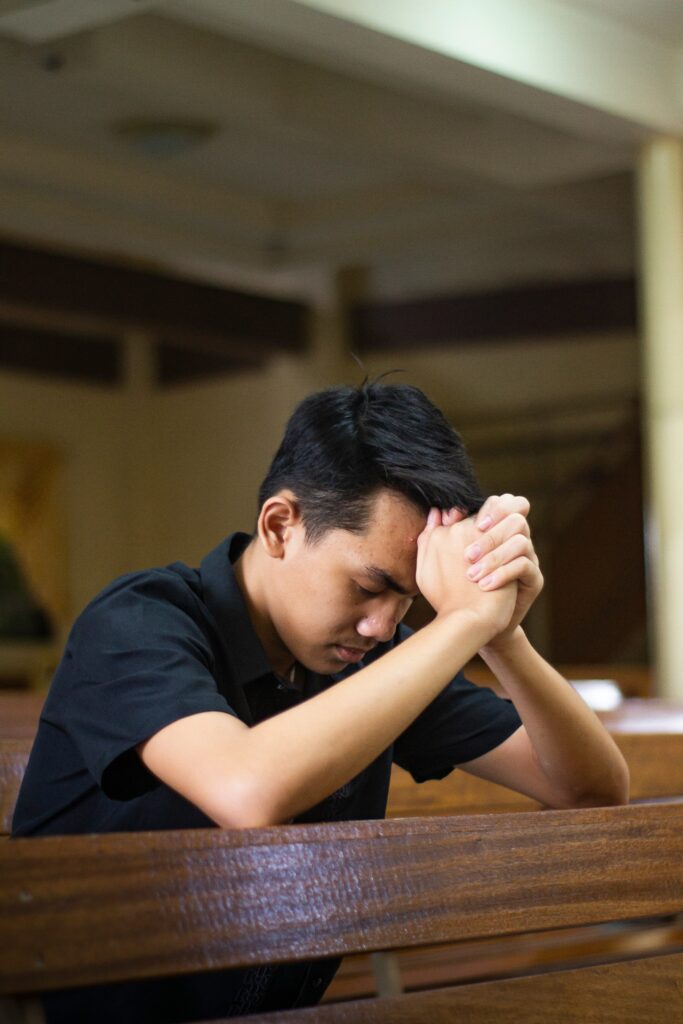
This reminds me of the old-time altar calls I remember from my youth. I can see Elijah standing there by the altar and saying, “Come forward.” It no doubt took him some time to repair the altar. The old-time altar calls took some time, too. Sometimes we would sing several hymns. Most always we sang “Is Your All on the Altar?” by Elisha A. Hoffman. The chorus goes, “Is your all on the altar of sacrifice laid? Your heart does the Spirit control? You can only be blessed and have peace and sweet rest, As you yield Him your body and soul.”
The first question that comes to my mind in this text is why is there an altar of the Lord on Mt. Carmel (I Kings 18:20)? Mt. Carmel would be considered a “high place.” Sacrifices to the Lord were to be made on the altar at the temple in Jerusalem. God has approved many sacrifices in random places. He approved of Elijah’s sacrifice on Mt. Carmel—yet, why is this called “the altar of the Lord?”
We must realize that it is in the Northern Kingdom of Israel. The crowd was not from the Southern Kingdom of Judah. In II Chronicles 10 we have the account of how the kingdom became divided—it was through Rehoboam, Solomon’s son, though “the cause was of God” (V. 15). It was because of sin. In II Chronicles 11:13-16 we see that Jeroboam, the northern king, got rid of the priests and Levites, “And he ordained him priests for the high places, and for the devils, and for the calves which he had made.”
What does this have to do with us today? Many of our mainline churches today have drifted from their beginning roots in holiness. Paul speaks of it in Romans 1:22, “Professing themselves to be wise, they became fools.” Can anyone become saved from their sin at an altar in a church like this? Yes! Let’s see how revival came on wicked Mt. Carmel.
In our text we see Elijah repairing a broken-down altar of the Lord. For revival to come, the altar must be repaired in our churches. Some altars are gone, others are only a piece of furniture. The altar must become where the action takes place. The sermon must lead to the climax of the altar call. Elijah took twelve stones, representing the 12 tribes of Israel, and built a new altar—one with meaning. Even the stones cried out to the Israelites, “Israel shall be thy name,” they may have cried (I Kings 18:31).
Elijah preached and prayed and the fire of God came. The thing that brought the whole congregation to revival, falling on their faces (V. 39), was the fire—consuming not only the sacrifice (the wood and the water), but the twelve stones that represented them. When people can truly see the flames of Hell, that they are headed for it, they will come running to GOD’S ALTAR!